
 By Callumlangham@gmail.com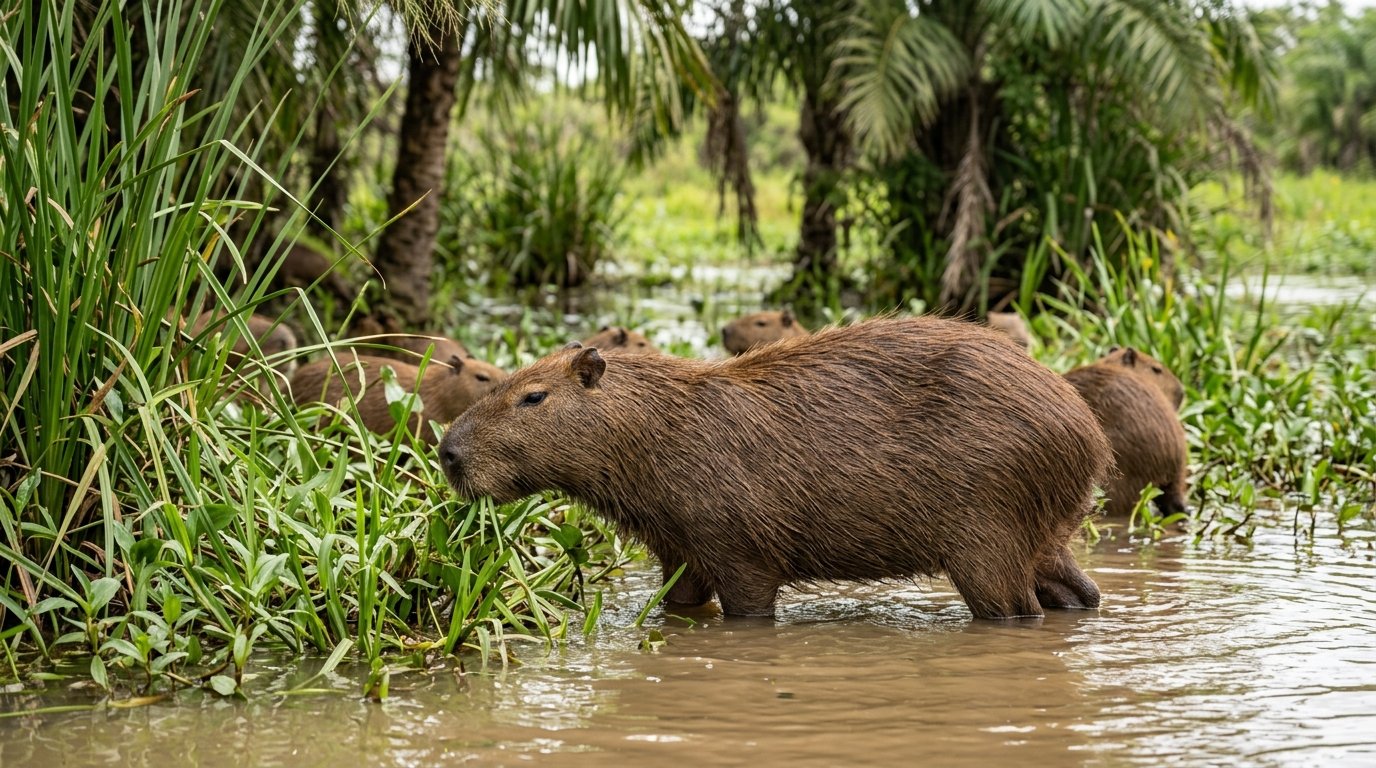
A cadibara, commonly known as a capybara, is the world’s largest semi-aquatic rodent native to South America. Scientifically called Hydrochoerus hydrochaeris, it lives in wetlands, rivers, and marshes where it feeds mainly on grasses and aquatic plants. Cadibaras are highly social animals that live in groups and play an important ecological role by controlling vegetation growth and serving as prey for large predators. Their webbed feet, barrel-shaped bodies, and continuously growing teeth help them thrive in aquatic environments.
The main benefits of the cadibara include its ecological role in managing vegetation growth in wetlands and serving as a primary food source for large predators. In human contexts, their main uses include ecotourism and, in some regions, sustainable agriculture for meat and leather. The main parts of a cadibara consist of its barrel-shaped bodies, partially webbed feet for swimming, and specialized teeth adapted for a herbivorous diet.
What is a Cadibara?
A cadibara is the largest semi-aquatic rodent in the world. This mammal belongs to the Caviidae (CVD) family and is native to South America. Scientists and wildlife enthusiasts often recognize them by their impressive size, as they can weigh between 35 to 66 kilograms (77 to 146 pounds).
Cadibaras thrive in various wetlands and marshy regions, including rivers, lakes, swamps, and marshes. Because they are highly social, these animals usually live in groups of 10 to 20 individuals, though larger herds form during the dry season. Their calm temperament has earned them the nickname “gentle giant” among animal lovers.
Cadibara vs Capybara – Understanding the Name and Species
The terms cadibara and capybara refer to the exact same species. While “capybara” is the standard name used in English, “cadibara” is a phonetic variation or local dialect term used in specific regions of South America. Both names describe the giant rodent known scientifically as Hydrochoerus hydrochaeris.
There is no biological difference between a cadibara and a capybara. They share the same ancestry with guinea pigs and rock cavies. Understanding that these names are synonymous helps clarify information for travelers and researchers exploring the Cadibara region.
The Origin and Meaning of the Word Cadibara
The word cadibara originates from the Tupi language of Brazil. The indigenous term “ka’apiuara” roughly translates to “one who eats slender leaves” or “grass-eater.” This name perfectly describes their herbivorous nature and daily activity of grazing.
Over time, the pronunciation evolved into various forms, including capybara and cadibara, depending on the influence of Portuguese, Spanish, and local indigenous languages. This cultural significance of names reflects the long history of humans coexisting with these rodents in the South American landscape.
Physical Characteristics
Cadibaras possess distinct physical traits that make them excellent swimmers. They have heavy, barrel-shaped bodies covered in coarse, brownish fur that dries quickly after they leave the water. Their partially webbed feet allow for agile movement through freshwater environments.
Another notable feature is the arrangement of their facial organs. Their eyes, ears, and nostrils are positioned on the top of their heads. This adaptation allows cadibaras to remain mostly submerged while still being able to breathe and monitor for predators like jaguars and caimans.
Physical Traits and Adaptations
There are 3 main physical adaptations that help cadibaras survive: webbed feet, specialized fur, and ever-growing teeth. Their webbed feet act like paddles in the water and help them navigate muddy riverbanks. Their brownish fur provides camouflage in their natural environment, blending with the soil and dried grasses.
Like other rodents such as mice and rats, cadibaras have incisors that grow continuously. They maintain these teeth by grazing on tough vegetation, which naturally wears the enamel down. Males also have a scent gland on their snouts called a morrillo, which they use to mark territory and communicate social status within the group.
Habitat and Geographical Range
Cadibaras live throughout most of South America, excluding the high Andes mountains. They are found in a wide geographical range that includes Brazil, Venezuela, Colombia, Argentina, and Uruguay. Because they are semi-aquatic, they are never found far from a permanent water source.
Their preferred habitats include the Amazon basin and the Pantanal wetlands. These areas provide the necessary freshwater and abundant vegetation required for their survival. While they prefer wild wetlands, they are adaptable and sometimes appear in areas affected by urbanization, such as golf courses or suburban parks near lakes.
Natural Habitat and Geographic Distribution
The natural habitat of a cadibara is defined by its proximity to water and grazing land. They require stable environments like marshes, flooded savannas, and forest edges near rivers. These locations offer safety, as cadibaras dive into the water to escape land-based threats.
The geographic distribution of cadibaras is extensive due to their ability to tolerate different climates, provided there is enough moisture. They play a critical ecological role in these habitats by dispersing seeds through their fecal matter and creating paths through thick vegetation that other smaller animals can use.
Diet and Feeding Patterns
Cadibaras are strict herbivores that eat between 3 to 4 kilograms (6.6 to 8.8 pounds) of vegetation every day. Their diet consists mainly of grasses and aquatic plants. During the dry season, they may also consume grains, melons, and squashes if they live near agriculture sites.
A unique aspect of their feeding pattern is coprophagy, which is the practice of eating their own feces. This behavior helps them digest cellulose more efficiently and extract maximum nutrients from their high-fiber diet. By consuming their waste, they replenish beneficial gut bacteria necessary for breaking down tough plant walls.
Diet and Feeding Behavior of Cadibaras
The feeding behavior of cadibaras is primarily crepuscular, meaning they are most active during dawn and dusk. Grazing during these cooler hours helps with thermoregulation, as they can avoid the intense midday sun. If they feel threatened by humans or predators, they may shift to a nocturnal feeding schedule.
When feeding, cadibaras are highly selective, often choosing specific types of grasses while ignoring others. They use their sensitive snouts to find the most nutrient-rich aquatic plants. This targeted grazing helps maintain the balance of plant species in the wetlands and prevents any single type of vegetation from becoming overly dominant.